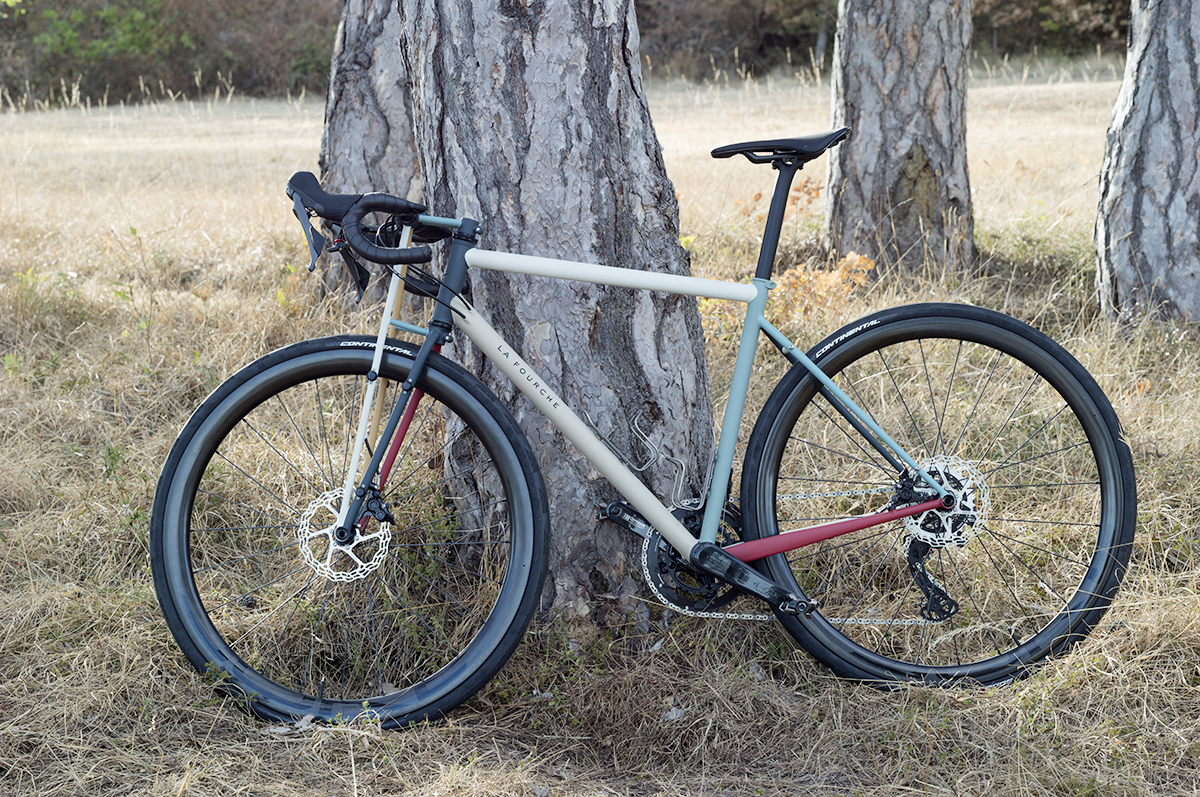
CDM 26 – Road
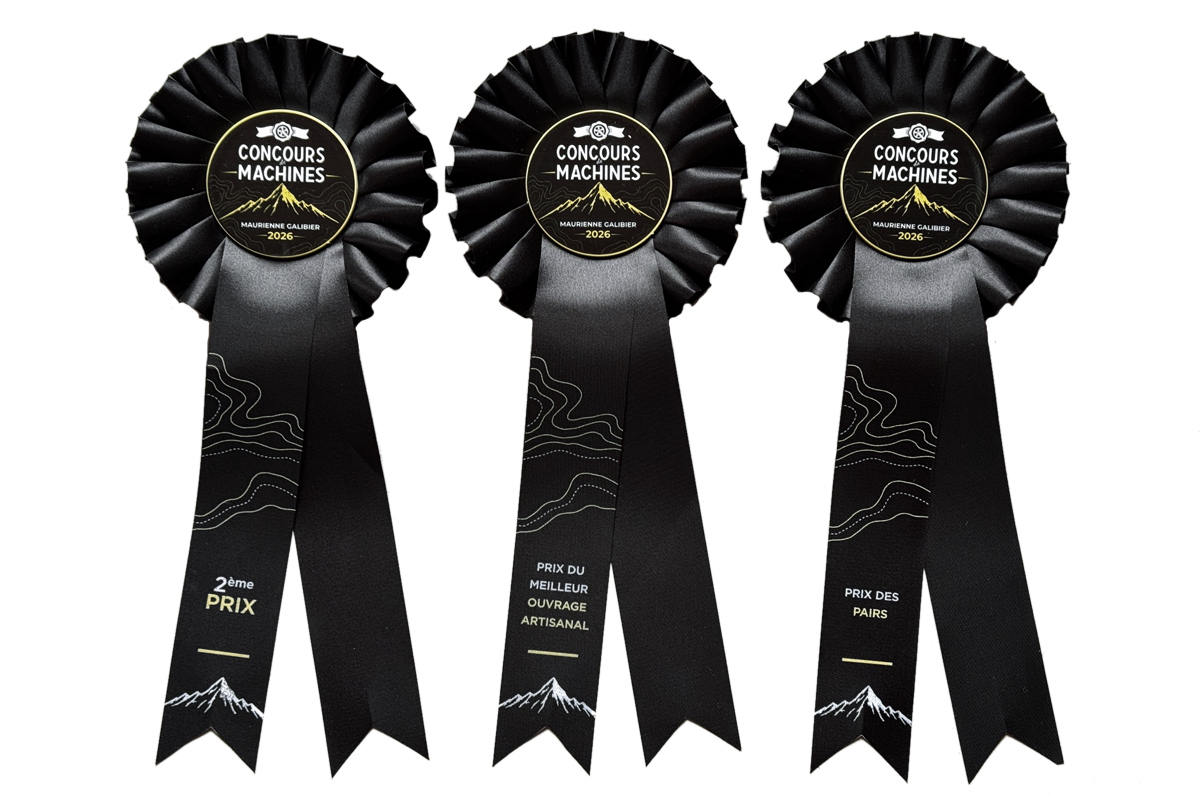
2nd Prize, Best Craftsmanship Award and Peers’ Award.
The 2026 Concours de Machines challenged builders to create a modular bicycle capable of seamlessly switching between a high-performance road bike and an adventure-ready gravel bike, while incorporating a luggage system designed for effortless one-handed use.
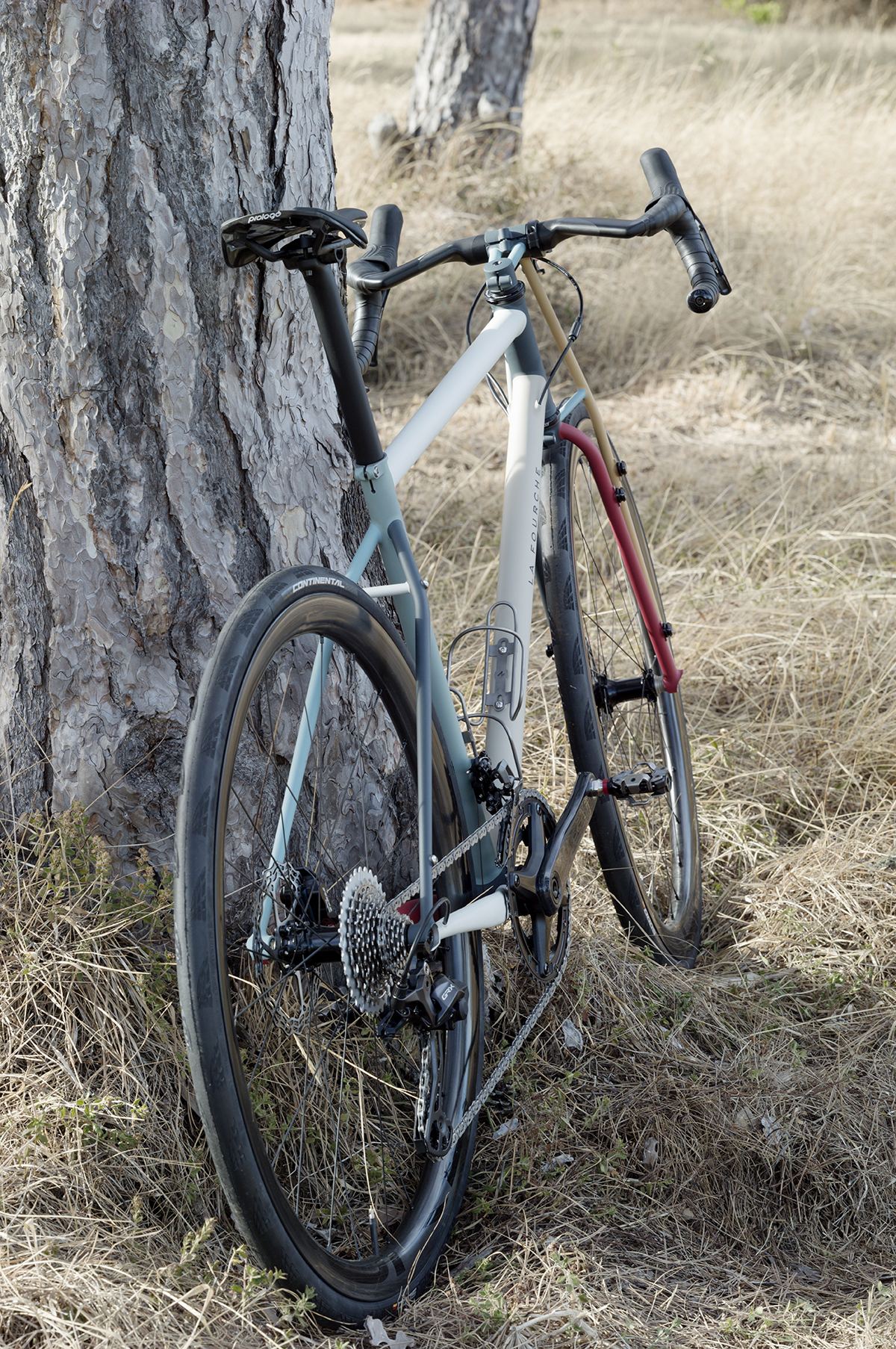
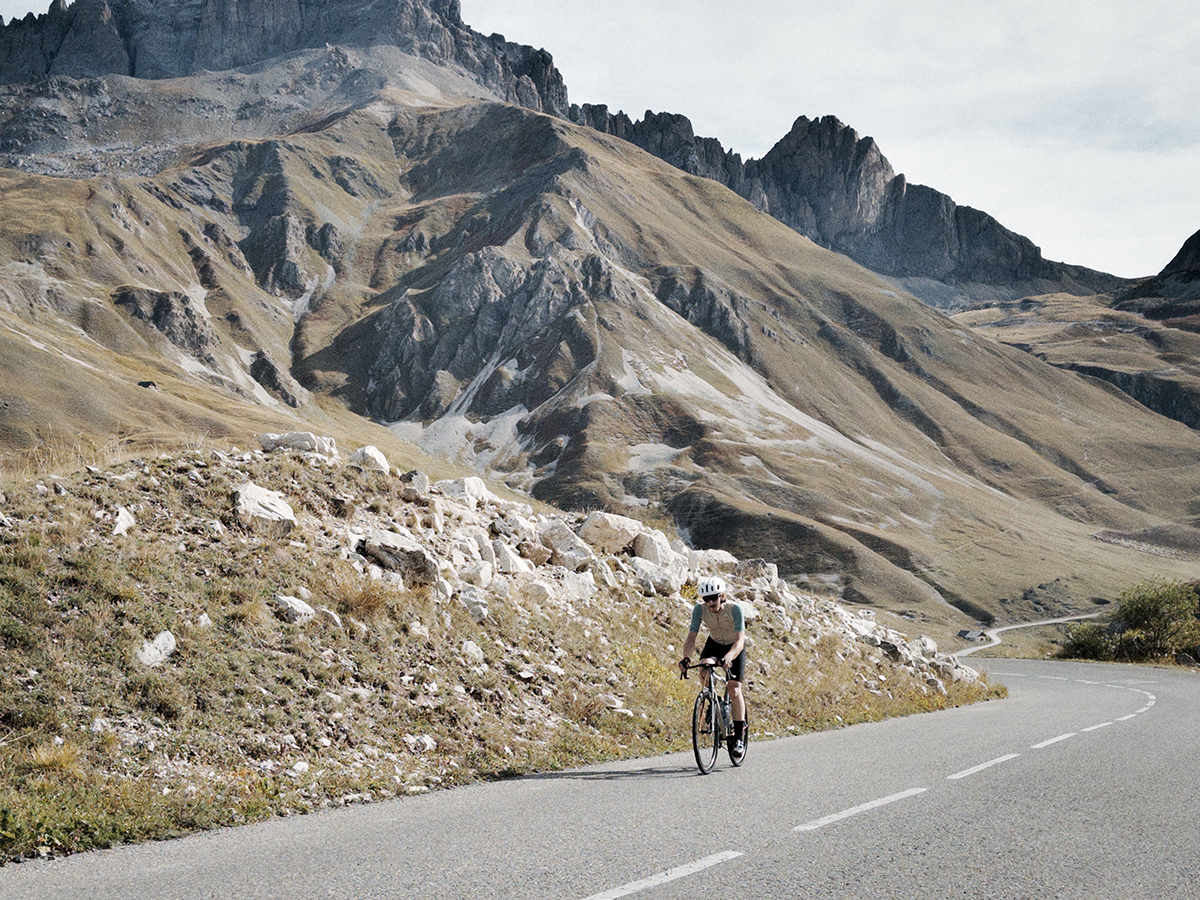
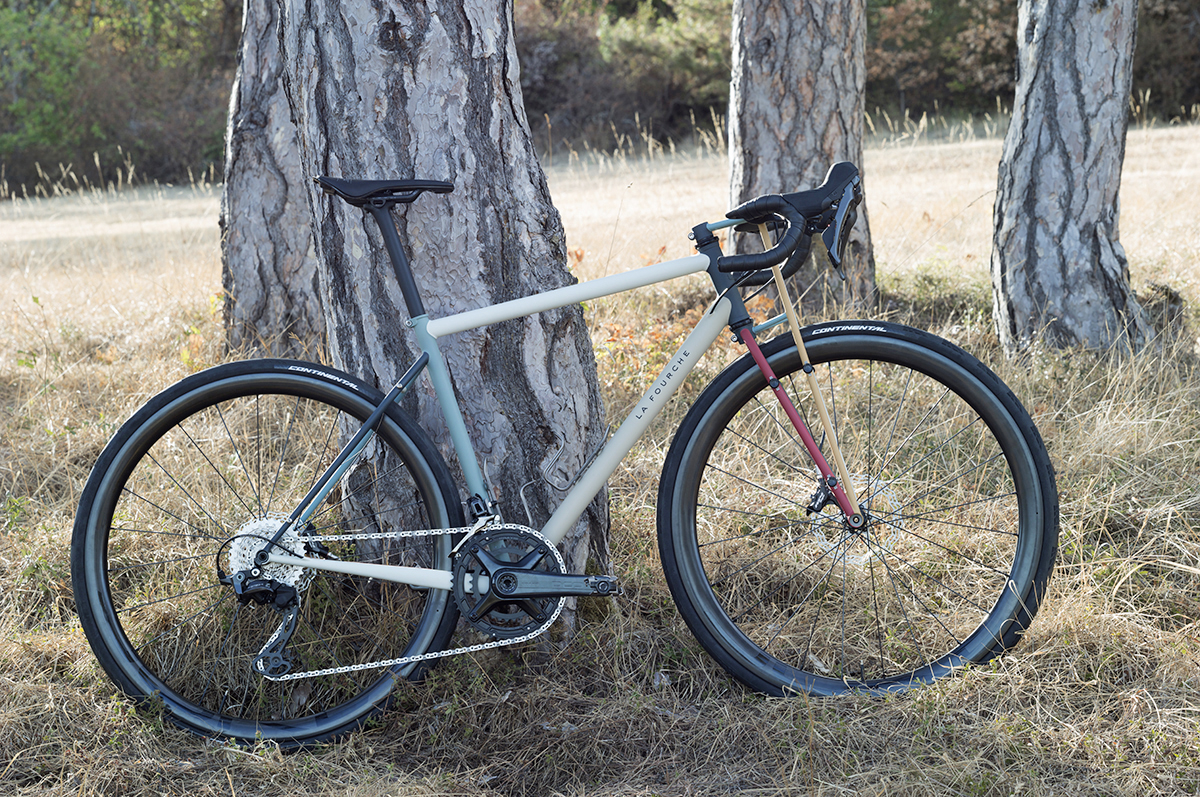
The bike presented here is deliberately simple and minimalist: only the wheelset needs to be changed to switch from one configuration to the other. With 700 × 32 mm tires for road riding and 27.5 × 2.2″ tires for off-road riding, this technical choice makes it possible to maintain a very similar overall wheel diameter between the two configurations, and thus to keep the same geometry for both types of riding. The rear of the bike takes its inspiration from road racing, with relatively short 415 mm chainstays, allowing 48/32 chainrings to be fitted despite the 55 mm-wide tires used off-road. The front of the bike, on the other hand, is designed to tackle rough terrain, with modern gravel dimensions: a 71° head angle and 65 mm of trail. The front end is relatively short in order to provide excellent handling and responsiveness, while allowing the rider to put weight over the front wheel and maximise grip when descending the hairpins of the Galibier. The 165 mm crank arms help optimise the rider’s position and eliminate toe overlap, even with the larger tires used in gravel mode.
Columbus tubing is used for the frame, with aerospace-grade chromoly tubing for the stem and truss fork assembly. The rear rack is made from stainless steel. The frame is assembled using fillet brazing and silver brazing.
8.4 kg in road configuration, with a conversion to gravel bikepacking mode in under 8 minutes.
One of the key considerations of the 2026 Concours de Machines was inclusivity. As part of a partnership with the French Federation of ParaSports, the brief encouraged participants to consider the interaction between the cyclist and their luggage. How could the bike’s bags be removed and installed using only one hand?
The four side panniers use a three-point Fidlock magnetic attachment system, allowing them to be attached and detached with one hand. The frame bag is equipped with magnets that attach directly to the steel frame structure. Two fabric straps with Velcro then secure the bag firmly in place. The top bag on the rear rack simply sits on the stainless tubes and is secured with an elastic cord that can easily be installed and tensioned with one hand. To take one-handed usability even further and make opening and closing the bags easier, they are designed with a roll-top system closed by an elastic cord and hook. The rear rack itself can also be installed and removed with one hand: simply remove the two upper mounting bolts and loosen the lower bolts by a few turns. The lower rack mounting tab is slotted, allowing the rack to be inserted onto or removed from the two bolts already installed on the frame.
Painted by System P.
Bags made in collaboration with Gamory Cycles, based on advice from Studio Ricochet.
Drivetrain: mixed Shimano GRX and SRAM Red, 12-speed, with a 10–33 road cassette and 10–36 off-road cassette, and Extralite derailleur pulleys.
Crankset: Praxis Doon GR.
Power-meter pedals: Favero Assioma Pro MX2.
Wheelsets: custom-built by Duke.
Rotors and brakes: Galfer rotors and Hope RX4+ SL calipers.
Handlebar: Ascent Aeroo.
Headset: Extralite.
Seatpost: Mcfk.
Saddle: Prologo.